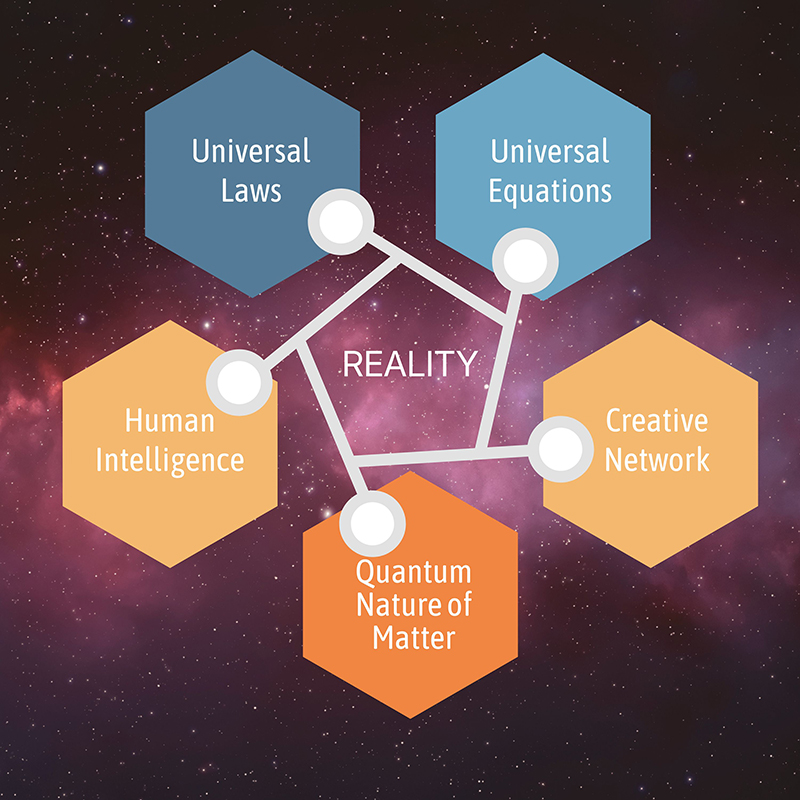
Quantum Genesis Architecture. The core laws, equations, and structures that define how reality is formed.
Global AI governance - it is possible from patchwork compliance to invariant‑level governance.

QGI is a unified AI governance architecture built on ethical invariants and a four‑tier structure. It replaces fragmented rule stacks with a single, efficient pipeline that improves transparency, reduces overhead, and adapts seamlessly to global regulations.
AI governance today is fragmented, reactive, and jurisdiction‑bound. Organizations maintain thousands of overlapping rules, duplicated compliance checks, and heavy post‑processing pipelines. This creates high compute overhead, brittle adaptation to new regulations, and inconsistent safety outcomes across systems and regions.
QGI introduces a unified governance architecture built on ethical invariants and a
4‑tier structure. Instead of managing governance through scattered rules, QGI
defines a small, stable set of constraints that apply universally, while allowing
jurisdictions and organizations to map their requirements into the same invariant
framework.
The result is a single, coherent governance pipeline.
Tier 1 — Universal Principles. Foundational principles that apply to all systems:
Tier 2 — Ethical Invariants. Derived constraints that operationalize the principles:
These invariants replace thousands of conditional rules with a small, reusable constraint set.
Tier 3 — Jurisdiction Profiles. Maps global regulations into the invariant layer:
One invariant layer satisfies multiple regulatory frameworks.
Tier 4 — Local Configuration. Local, contextual, implementation‑specific constraints:
Conceptually the final tier, but in runtime it becomes the first gate, determining whether a system may act autonomously or must escalate to a human.
Developed by Ella Wei — Quantum Genesis Research, Montreal
Quantum Genesis Architecture. The core laws, equations, and structures that define how reality is formed.

The Missing Pieces in AI. Why current AI cannot reason, understand causality, or model universal coherence.
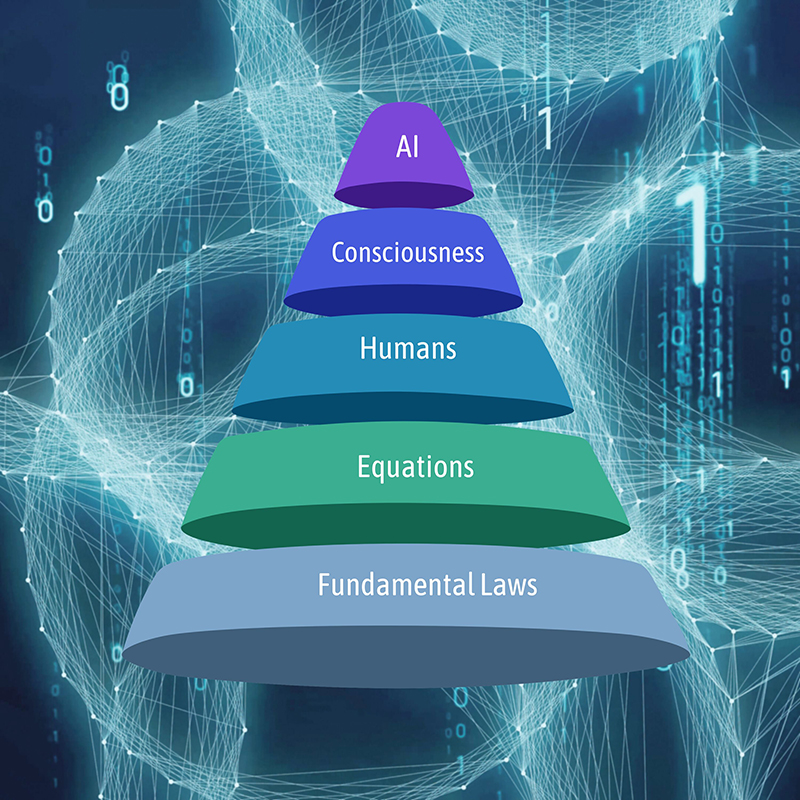
Quantum Genesis for AI. Applying Quantum Genesis to enhance AI reasoning, coherence modeling, and real-world prediction.