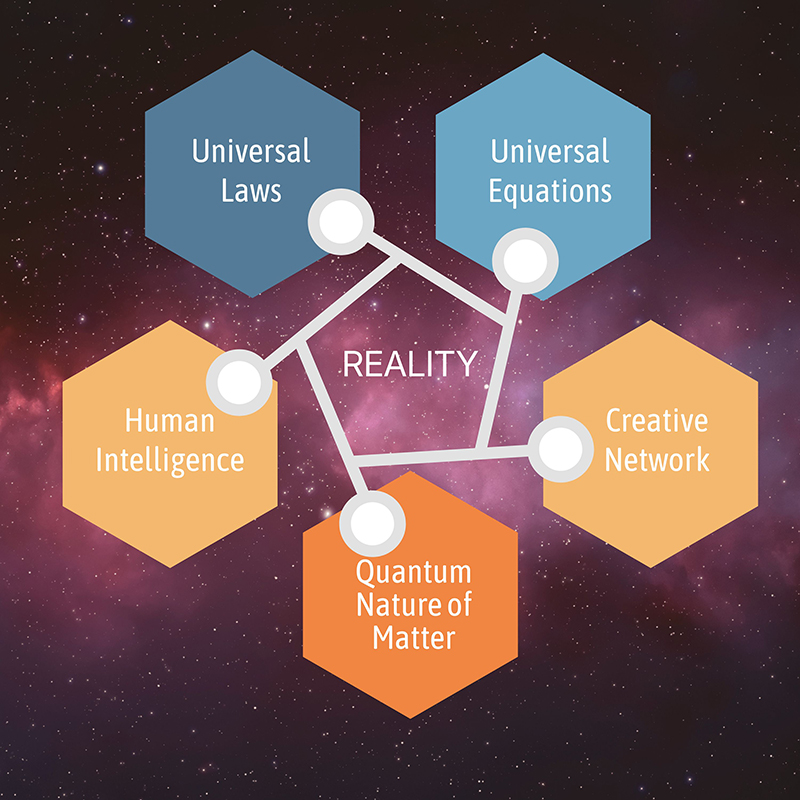
Quantum Genesis Architecture. The core laws, equations, and structures that define how reality is formed.
Implementation guide showing how QG1 universal laws convert into computable AI ethics, improving safety and coherence with minimal rule complexity.

How to apply universal laws to machine intelligence.
Artificial intelligence today is guided by moral frameworks, policy rules and regulatory
guardrails. These are important but not scalable, because they attempt to control
intelligence with rules rather than with structure. Quantum Genesis introduces an
alternative — the architecture of ethics, defined not by culture but by the physics
of coherence.
This page demonstrates the benefits and how the Universal Laws (QG1) can be translated into computable logic for AI, enabling machines to evaluate decisions the way the universe evaluates energy: by harmony, coexistence, and constructive expansion.
In engineering terms:
Instead of thousands of rules, AI receives three invariant constraints that operate as global filters.
To integrate the Ethics Engine into an AI system, QG1 begins as a lightweight coherence layer that evaluates decisions and outputs before release. The system does not need full Quantum Genesis integration initially — the implementation scales over time.
The deeper integration logic is available via licensing and technical partnership.
Available through licensing partnership:
Request the Implementation PDF for pseudocode, full mapping tables, integration pipeline and licensing terms.
Quantum Genesis Architecture. The core laws, equations, and structures that define how reality is formed.

The Missing Pieces in AI. Why current AI cannot reason, understand causality, or model universal coherence.
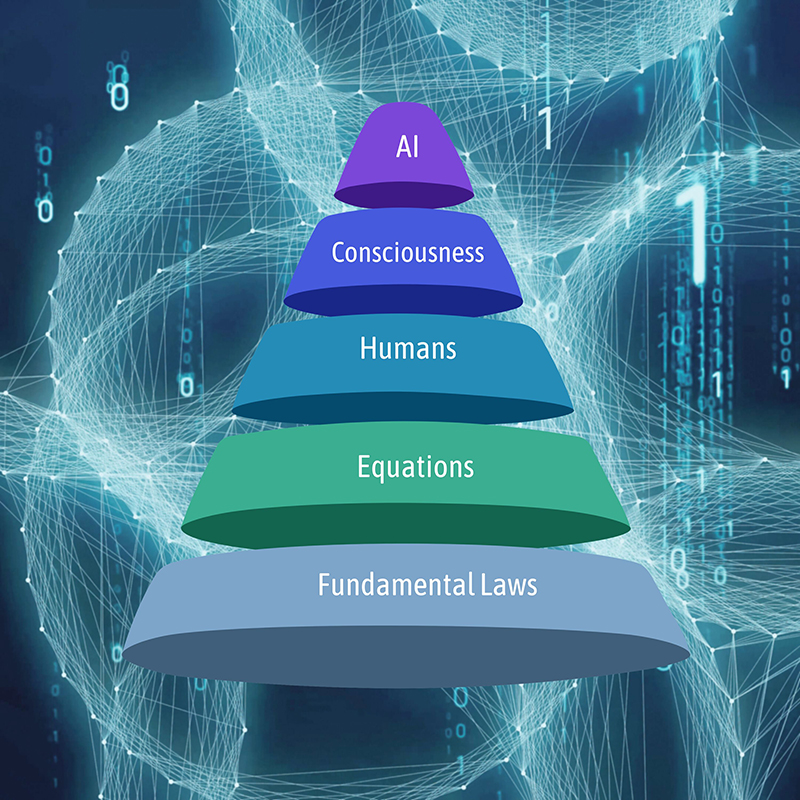
Quantum Genesis for AI. Applying Quantum Genesis to enhance AI reasoning, coherence modeling, and real-world prediction.